Before You Break Ground in Encino, Find Out What's Already Protected in the Yard
August 13, 2026
August 13, 2026
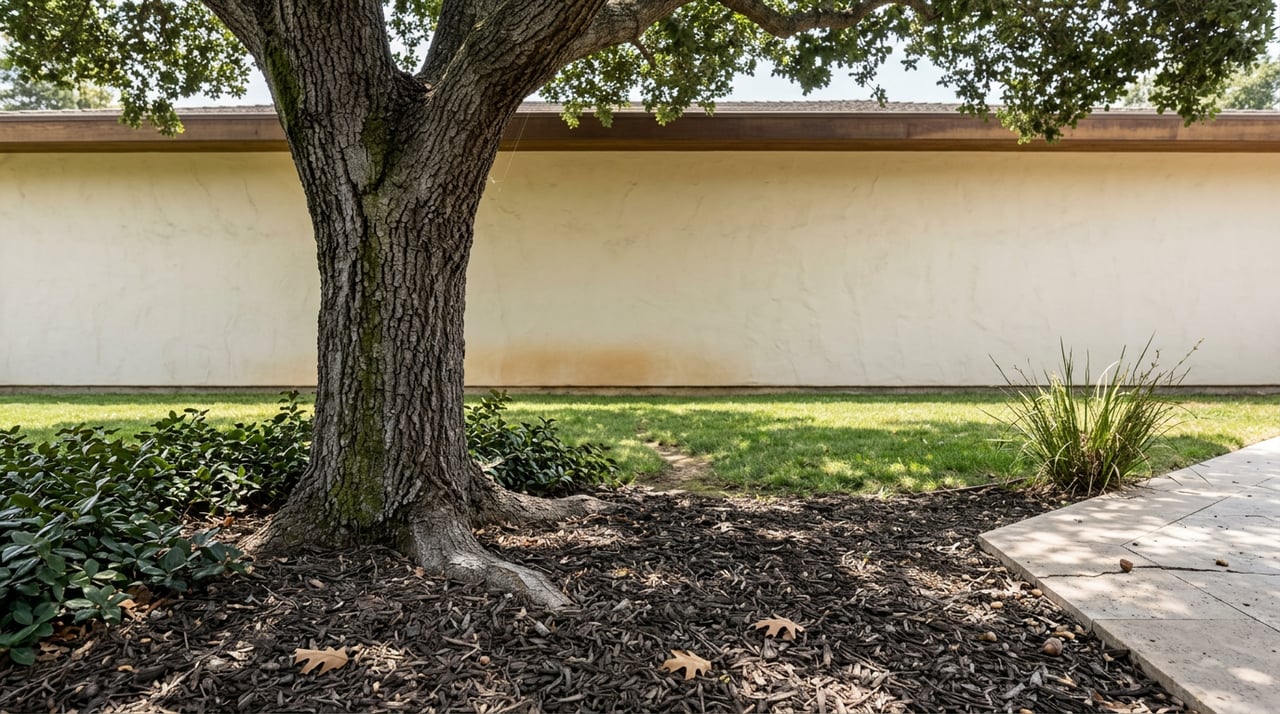
A buyer walks a flat, half-acre lot in Royal Oaks with a contractor in tow, already sketching where the pool goes and how far the addition can stretch toward the back fence. The house is a 1960s ranch, the kind Encino built its reputation on, and the yard is shaded by a live oak old enough to have outlasted three previous owners. Nobody on the walk-through treats the tree as anything but scenery. It is, legally, one of the more consequential features on the parcel.
That gap between how a mature oak reads to a buyer and how the City of Los Angeles treats it is the thing most Encino listings never mention, and it is the thing that most often stalls a renovation, a sale, or an escrow that looked routine on paper.
Encino takes its name from the Spanish word for oak, a nod to the oak groves that covered the valley floor when the area was part of Rancho Los Encinos. The city's own Protected Trees Photo Guide singles out the Encino Oak Tree as one of the valley's landmark specimens. The heritage isn't decorative. It's written into municipal code, and it applies to every qualifying tree on every residential lot in the neighborhood, not just the famous ones.
That distinction matters because Encino's real estate identity rests heavily on its large, tree-shaded lots. Buyers comparing Royal Oaks, Amestoy Estates, and the hillside pockets near the Encino Reservoir are often shopping for exactly the kind of mature canopy the ordinance was written to preserve. The lot's appeal and its legal constraint come from the same trees.
Los Angeles Municipal Code Sections 46.00 through 46.06 govern the removal, relocation, or damage of specific native species, and the list is broader than most buyers assume. It covers California live oak and valley oak, Southern California black walnut, western sycamore, California bay, Mexican elderberry, and toyon. A tree qualifies once it measures four inches or more in cumulative trunk diameter, measured four and a half feet above grade, a threshold the code calls Diameter at Standard Height.
The part that trips people up isn't the species list. It's the definition of removal. The ordinance doesn't limit itself to cutting a tree down. In plain terms, it includes any act that causes a protected tree to die, whether through root damage, grading, equipment operation, or filling the drip line during construction. A contractor pouring a new patio slab six feet from an oak's trunk can trigger the same permit requirement as taking a chainsaw to it, because the root system doesn't stop at the visible canopy.
No relocation, removal, or drip-line disturbance can happen without a permit from the Board of Public Works, and the application has to include a report from a certified Tree Expert, defined under LAMC Section 17.02 as either an ISA-certified arborist holding a California Agricultural Pest Control Advisor license, a licensed landscape architect, or a registered consulting arborist. That report has to identify every protected tree on the parcel, its health, and any construction activity within its root zone before the city will sign off.
The ordinance rarely comes up while a family is enjoying the shade. It comes up during escrow, when a title search, an appraisal, or a buyer's contractor pulling permits for a remodel runs into work that was never authorized.
LAMC Section 46.06 gives the city authority to withhold or revoke building permits when a protected tree has been illegally removed or damaged. That means a seller who added a pool, expanded a patio, or regraded a side yard near an oak without a Public Works permit hasn't just done unpermitted landscaping. They've created a condition that can resurface the moment a buyer applies for a new permit on the same property, because the city's records and the property's physical footprint won't match.
This is a particularly live issue on Encino's older ranch lots, where decades of incremental additions are common and where a mature oak's root zone often extends well past where anyone thought to check. A protected oak sitting twelve feet from a proposed foundation line has a root system that can reach into the buildable area itself, which is exactly the kind of conflict a tree survey is meant to catch before it becomes a stop-work order.
For sellers, the practical exposure is disclosure. If you know work was done near a protected tree without the required permit, that is a material fact. For buyers, the exposure is timing. Discovering an unresolved tree issue during your own renovation permit application, months after closing, is a far more expensive place to find it than during due diligence.
Encino sits inside the City of Los Angeles, but buyers shopping the wider Westside and Valley market are often comparing lots across city lines without realizing the rules change at the boundary. Beverly Hills protects trees differently, measuring trunk circumference instead of diameter and applying three separate tiers: native trees at 24 inches or more in circumference, heritage trees at 48 inches or more regardless of species, and urban groves defined as 50 or more trees with canopies within six feet of each other. Malibu goes further on the back end, requiring a ten-year monitoring period for any replacement tree, well beyond what Los Angeles requires.
None of that is relevant if you only ever buy inside Encino. It becomes relevant fast if you're weighing a large lot in Encino against a comparable one in Beverly Hills or the Santa Monica Mountains, because "I already checked the tree rules" doesn't transfer across a city line. Each jurisdiction runs its own permit process, and a contractor's experience in one doesn't guarantee compliance in another.
A tree survey belongs in the same early phase as a topographic survey or a geotechnical report, not as an afterthought once design is finished. In practice, that means:
Does this apply to a tree on a neighbor's property that overhangs my lot? The ordinance's protections attach to the tree itself, including root systems that extend beyond the trunk. Encroachment into a protected tree's root zone can be relevant even when the trunk sits on an adjacent parcel, which is why a site-specific tree report matters more than a quick visual check.
What if the tree is already dead or hazardous? The permit process still applies, but a documented safety hazard is the kind of finding a Tree Expert report is designed to establish. It doesn't remove the requirement to apply for a permit before removal.
Does a small condo lot in Encino need to worry about this? Less often, since the ordinance applies to qualifying protected species regardless of lot size, but the risk concentrates on Encino's larger single-family parcels, where mature oaks and decades of additions are far more common.
An oak on an Encino lot is not just part of the view. It's part of what the city will or won't let you build next, and it's part of what a buyer's contractor will find the day they pull a permit. Knowing which trees on a property are protected, and whether past work respected that, is the kind of detail that belongs in a conversation before an offer, not a surprise after one.
If you're weighing a renovation, preparing a large Encino lot for market, or trying to understand what a mature tree canopy actually means for your plans, Abdo Pierre Faissal brings both local market fluency and a construction background to that conversation. Get In Touch to talk through what your lot allows before you commit to a design or a listing price.
Stay up to date on the latest real estate trends.

Whether buying or selling, Abdo Pierre Faissal delivers a tailored strategy, expert negotiation, and a seamless experience from start to finish.
Get In Touch With Us

ABDO PIERRE FAISSAL | CA DRE# 02090175
The Agency | CA DRE# 01904054
ADDRESS
14140 Ventura Blvd Ste 101
Sherman Oaks, CA 91403