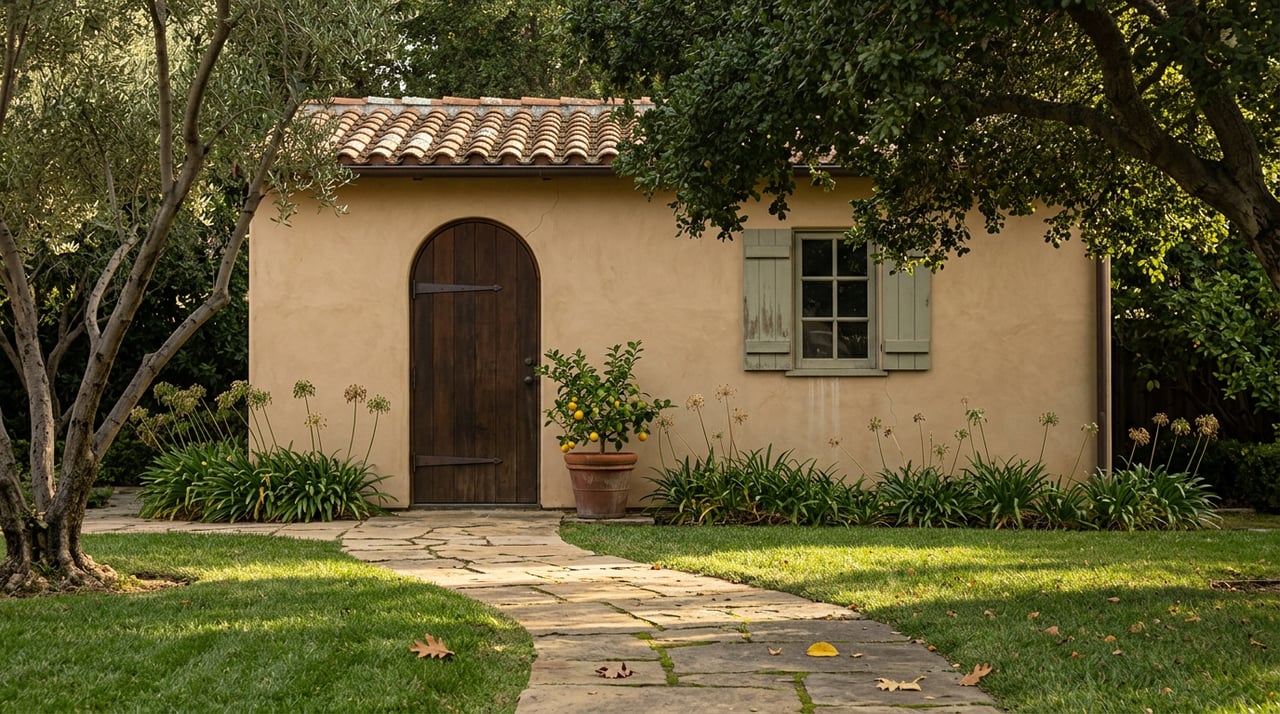
The Guest House Out Back: What AB 2533 Actually Changes for Encino Sellers
August 20, 2026
August 20, 2026
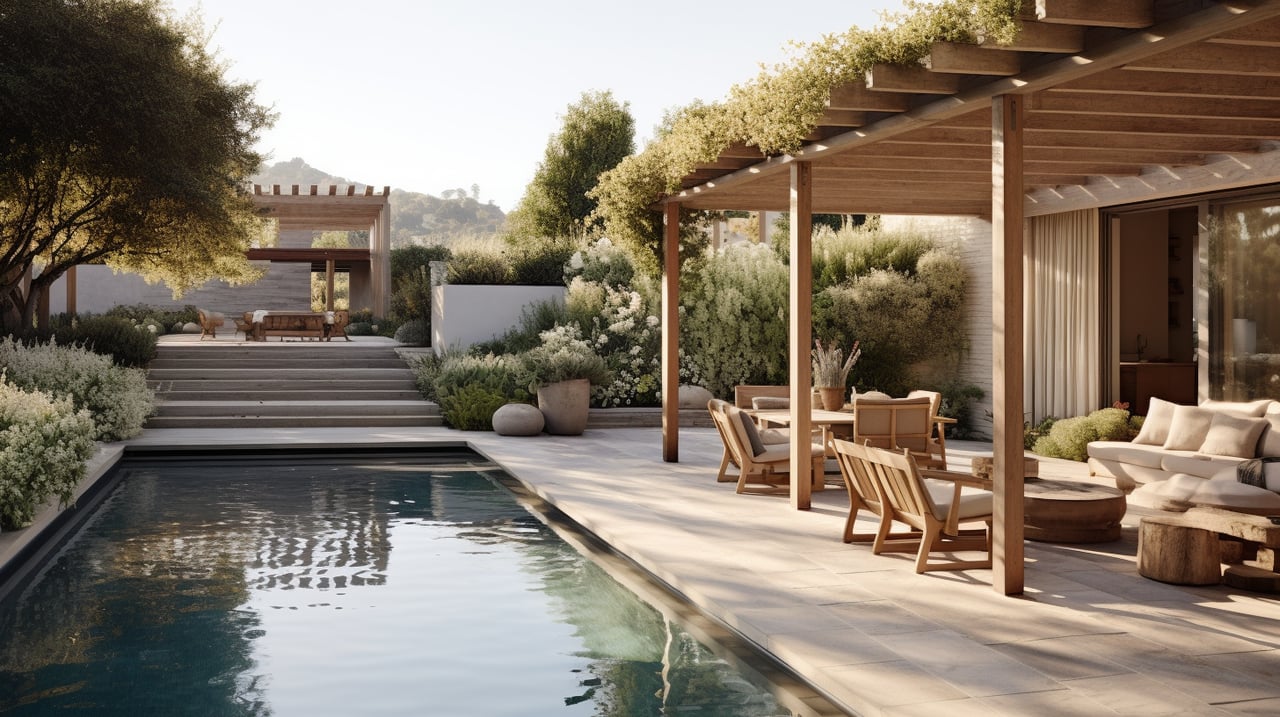
Walk the gated lanes of Rancho Estates or Amestoy Estates on any given afternoon and you'll pass at least one property with a second structure tucked behind the pool. A guest house. A pool house with a bathroom and a hot plate. A detached garage that someone, at some point, quietly turned into a bedroom. These structures are not an anomaly in Encino. They are close to the neighborhood's default setting, a holdover from an era when a half-acre lot and a separate building out back were simply how estate living worked here.
What most sellers don't know is that the rules governing what to do with that structure changed in a way that makes the old advice, disclose it and take the discount, only half the story. According to OwnADU, since January 1, 2025, California has run a genuine amnesty program for pre-2020 unpermitted accessory dwelling units. But Los Angeles is layering that state program on top of an older city ordinance with a very different price tag attached, and the two paths look similar enough at the counter that a seller who doesn't ask the right question can end up on the wrong one.
The guest house tradition here isn't incidental. The estate parcels south of Ventura Boulevard, in pockets like Rancho Estates and the hillside corridor around Royal Oaks, were built on deep lots specifically designed to accommodate a main house, a pool, and a separate structure for guests or staff. Lots in Rancho Estates commonly run from roughly a third of an acre to well over half an acre, and a detached guest house has long been part of what buyers expect to see when they tour these streets.
North of the Boulevard, toward the Sepulveda Basin, the story is different but leads to the same outcome. Those postwar tract homes were built with long driveways and detached rear garages, and decades of owners have quietly converted those garages into livable space, sometimes for a family member, sometimes for rental income, almost always without pulling a permit. Los Angeles has a well-documented history of unpermitted conversions in exactly this kind of pre-1980 housing stock, and Encino's mix of large flat lots and older construction puts more of its homes in that category than you'd find in a denser, newer part of the city.
Add in Lake Encino's park-adjacent parcels near Los Encinos State Historic Park, itself home to the nine-room de la Ossa adobe built in 1849 as a way station that offered hospitality to travelers on El Camino Real, and you have a neighborhood where a second structure on the property has been part of the picture since before Encino was Encino.
Before January 1, 2025, an unpermitted guest house or garage conversion in Los Angeles was, for most sellers, a binary choice. Legalize it through the standard building and safety process, or disclose it as-is and accept whatever discount the market demanded.
Assembly Bill 2533 changed the math. Signed by the governor in September 2024 and effective January 1, 2025, it created a genuine amnesty pathway for unpermitted ADUs and junior ADUs built before January 1, 2020, extending an earlier program that only covered units built before 2018. BWS Law explains that, under this pathway, cities cannot deny a legalization permit solely because the structure violates a building standard, unless the violation makes the unit truly substandard under state health and safety code. The process is built around a health and safety checklist rather than a full code rebuild, and impact fees are waived when the legalization doesn't require new utility infrastructure.
For a seller sitting on a 1960s garage conversion or a guest house that's been standing quietly for forty years, that's a meaningfully different proposition than it was two years ago.
Los Angeles didn't retire its older Unpermitted Dwelling Unit Ordinance when the state amnesty took effect. The two programs run in parallel. The city's own UDU Ordinance, in place since 2017, offers a legalization path too, but it comes with a condition AB 2533 doesn't require: at least one legalized unit per property has to be deed-restricted as low or moderate income housing.
That's a permanent restriction on how you can rent or sell that structure going forward, and it's not something most sellers would knowingly choose if they had a cleaner option. The building and safety department does accept AB 2533 applications without that affordability covenant attached. If you want the state amnesty pathway, identify your request as an AB 2533 application rather than a general legalization request.
For an Encino seller with a guest house on an estate lot worth several million dollars, an accidental deed restriction on future rental income isn't a rounding error. It's a decision that follows the property for as long as that unit exists.
The numbers make the stakes clear. Legalizing a garage conversion or backyard structure through the AB 2533 amnesty path typically runs $15,000 to $30,000 total once you account for the application fee, the safety inspection, and whatever corrections the inspector flags.
Compare that to what happens if you leave the structure unpermitted and simply disclose it. A home listed on the open market with full disclosure of unpermitted work typically sells for 10 to 20 percent below what a comparable, fully permitted home would fetch. Sell to a cash buyer or investor instead, and the discount widens to 30 to 40 percent, since those buyers are pricing in both the uncertainty and their own cost of resolving it later.
Run that against Encino's current market. As of May and June 2026, the median sale price across the neighborhood sits around $1,517,500, with the hillside and south-of-Ventura tier in the 91436 ZIP code frequently closing above $2 million and the flats north of the Boulevard in 91316 typically landing between $900,000 and $1.8 million. On a $2 million estate sale, a 10 to 20 percent disclosure discount is $200,000 to $400,000 in lost proceeds. Set beside a $15,000 to $30,000 legalization cost, the math stops being close.
That gap is the reason this isn't just a legal technicality. It's a pricing decision, and it's one that has to be made before the listing goes live, not after an inspector flags the structure during escrow.
None of this changes the baseline disclosure obligation. California Civil Code Section 1102 still requires you to disclose known unpermitted work on the Transfer Disclosure Statement regardless of which path you choose, and selling as-is never removes that duty. What changes is the order of operations.
If your guest house or converted garage was built before January 1, 2020, the useful first move is a permit history pull to confirm the construction date, followed by a conversation with Los Angeles Department of Building and Safety that specifically references AB 2533 amnesty, not a general legalization request. Legalization under the state pathway typically takes a few months from application to final sign-off, which is workable if you're planning a listing rather than reacting to an already-pending offer.
What if I don't know exactly when the structure was built? Permit history and county assessor records are the starting point. If those don't resolve it, older aerial photography and prior listing descriptions can sometimes establish a construction date close enough to determine amnesty eligibility.
Does legalizing before listing delay my sale? It can, since the process typically runs a few months. Sellers with a longer runway before listing benefit most. If you're already close to going to market, disclosing as-is and pricing accordingly is often the more realistic path.
Will a legalized guest house count toward my home's appraised square footage? Only once it's fully permitted and reflected in county assessor records. Appraisers work from official records, not from what's visible on a walkthrough, which is exactly why legalization changes the appraised value and not just the marketing story.
If you're weighing whether to legalize a guest house before listing an Encino estate, or you want a second opinion on how a specific structure affects your pricing strategy, Abdo Pierre Faissal brings a construction and engineering background to exactly this kind of decision. Get in touch to talk through your property before it goes on the market.
This article is general information, not legal, tax or financial advice. Consult a qualified professional about your situation.
Stay up to date on the latest real estate trends.

Whether buying or selling, Abdo Pierre Faissal delivers a tailored strategy, expert negotiation, and a seamless experience from start to finish.
Get In Touch With Us
ABDO PIERRE FAISSAL | CA DRE# 02090175
The Agency | CA DRE# 01904054
ADDRESS
14140 Ventura Blvd Ste 101
Sherman Oaks, CA 91403